
Understanding Sciatica and the Role of Physiotherapy
Physiotherapy offers targeted exercises, like nerve glides and stretches, detailed in PDF guides, to alleviate sciatic pain and restore optimal function effectively.
Gentle movement, such as walking or swimming, maintains mobility, while specific routines address nerve inflammation and muscle imbalances, promoting long-term relief.
Sciatica exercises, often found in downloadable PDFs, can be a blessing, easing nerve pain through preventative measures and targeted rehabilitation programs.
What is Sciatica?
Sciatica isn’t a diagnosis itself, but rather a symptom of an underlying condition causing pain radiating along the path of the sciatic nerve. This discomfort, often described as a sharp, shooting pain, can extend from the lower back, through the buttocks, and down the leg, sometimes reaching the foot.
The intensity varies greatly, ranging from a mild ache to a debilitating pain. While often associated with nerve compression, such as a herniated disc, it can also stem from spinal stenosis, piriformis syndrome, or other issues.
Understanding that physio exercises, often detailed in accessible PDF guides, are crucial for managing sciatica is key; These guides frequently outline gentle stretches and strengthening routines designed to alleviate pressure on the nerve and restore function. Early intervention, guided by a qualified professional, can significantly improve outcomes and prevent chronic pain.
Effective management often involves a combination of pain relief strategies and targeted exercises, readily available through resources like downloadable PDFs.
The Sciatic Nerve: Anatomy and Function
The sciatic nerve is the longest and thickest nerve in the human body, originating in the lower back and running through the buttocks and down each leg; It’s not a single nerve, but a bundle of five separate nerves branching out from the spinal cord – L4 through S3.
This complex network controls muscle function in the leg and foot, enabling movement, and provides sensation to the skin. When compressed or irritated, it results in the characteristic pain of sciatica.

Physio exercises, often detailed in PDF resources, aim to address the root cause of nerve irritation. These exercises focus on releasing tension in surrounding muscles, improving spinal alignment, and promoting nerve gliding. Understanding the nerve’s anatomy is crucial for targeted treatment.

Downloadable PDF guides frequently illustrate proper form and technique for these exercises, ensuring safe and effective rehabilitation.
Common Causes of Sciatica
Several factors can contribute to sciatica, often involving compression or irritation of the sciatic nerve. Herniated discs are a frequent culprit, pressing on nerve roots in the lower back. Spinal stenosis, a narrowing of the spinal canal, can also cause compression.
Piriformis syndrome, where the piriformis muscle in the buttock spasms and irritates the nerve, is another common cause. Less frequently, tumors or infections can contribute.
Physio exercises, detailed in readily available PDF guides, address these underlying causes. These exercises focus on strengthening core muscles, improving posture, and releasing tension in the piriformis and hamstring muscles.

A PDF resource will often outline a personalized plan based on the specific cause of your sciatica, promoting optimal recovery and pain management.

Physiotherapy Exercises for Sciatica: A Comprehensive Guide
Physiotherapy utilizes targeted exercises, often detailed in convenient PDF guides, to alleviate sciatic pain and improve function through structured rehabilitation programs.
Initial Considerations Before Starting Exercises
Before commencing any physiotherapy exercises for sciatica, consulting a qualified healthcare professional is paramount. A proper diagnosis is crucial to ensure exercises are appropriate for your specific condition and pain source.
Downloadable PDF guides detailing sciatic nerve exercises are helpful, but shouldn’t replace personalized advice. Begin slowly and gently, prioritizing proper form over intensity to avoid aggravating symptoms.
Listen attentively to your body; pain is a signal to stop or modify the exercise. Warm-up adequately before each session and cool down afterward. Consider your current fitness level and any other underlying health conditions.
Understand that consistency is key, but progress should be gradual. A physiotherapist can create a tailored plan, monitoring your response and adjusting exercises as needed for optimal results.
Warm-up Exercises for Sciatica
Prior to engaging in more strenuous sciatic nerve exercises – often detailed in physio PDF guides – a thorough warm-up is essential. This prepares your muscles and nerves for activity, minimizing the risk of injury and maximizing effectiveness.
Gentle spinal mobility exercises, like pelvic tilts and knee-to-chest stretches, increase blood flow and flexibility. These movements should be performed slowly and controlled, focusing on range of motion, not speed.
Gluteal muscle activation exercises, such as glute bridges (modified if needed), prepare the supporting muscles around the sciatic nerve. These help stabilize the pelvis and lower back.
Remember to listen to your body and avoid any movements that exacerbate pain. A proper warm-up, guided by a PDF or physiotherapist, is a crucial first step.
Gentle Spinal Mobility Exercises
Spinal mobility exercises, frequently illustrated in physio exercises for sciatica PDF resources, are foundational for relieving pressure on the sciatic nerve. These movements aim to restore natural spinal movement and reduce stiffness.
Pelvic Tilts are a simple yet effective starting point. Lie on your back with knees bent and gently rock your pelvis forward and backward, engaging your core. Repeat 10-15 times.
Knee-to-Chest stretches, also commonly found in PDF guides, involve gently pulling one knee towards your chest while keeping the other leg flat. Hold for 20-30 seconds and repeat on both sides.
These exercises should be performed slowly and with controlled movements, avoiding any sharp or sudden motions. Listen to your body and stop if you experience increased pain;
Gluteal Muscle Activation Exercises
Strengthening the gluteal muscles – often detailed in physio exercises for sciatica PDF guides – is crucial for stabilizing the pelvis and lower back, reducing strain on the sciatic nerve. Weak glutes contribute to poor posture and nerve compression.
Glute Bridges are an excellent starting point. Lie on your back with knees bent and lift your hips off the floor, squeezing your glutes at the top. Repeat 10-15 times.
Clamshells, frequently demonstrated in PDF resources, involve lying on your side with knees bent and lifting your top knee, keeping your feet together. Repeat 15-20 times on each side.
Focus on controlled movements and proper form. Avoid arching your back excessively during glute bridges. These exercises should be pain-free; modify if needed.
Core Strengthening Exercises for Sciatica
A strong core provides essential support for the spine, alleviating pressure on the sciatic nerve – a key focus within physio exercises for sciatica PDF programs. Weak core muscles contribute to instability and exacerbate pain.
Pelvic Tilts are a gentle starting point. Lie on your back with knees bent and gently tilt your pelvis forward and backward, engaging your abdominal muscles. Repeat 10-15 times.
The Bird Dog exercise improves stability. Start on your hands and knees, then simultaneously extend one arm and the opposite leg, maintaining a neutral spine. Repeat 10-12 times per side.
Modified Partial Crunches, often illustrated in PDF guides, involve a small lift of the head and shoulders, focusing on abdominal engagement. Avoid pulling on your neck. These exercises should be performed with controlled movements.
Pelvic Tilts
Pelvic Tilts are a foundational exercise frequently detailed in physio exercises for sciatica PDF guides, serving as a gentle introduction to core engagement and spinal mobility. This exercise aims to restore a neutral pelvic position, reducing strain on the sciatic nerve.
Begin by lying on your back with your knees bent and feet flat on the floor. Maintain a natural curve in your lower back. Gently tilt your pelvis backward, flattening your lower back against the floor, and then tilt forward, creating a small arch.
Focus on using your abdominal and gluteal muscles to control the movement. Perform 10-15 repetitions, breathing deeply throughout. Avoid holding your breath.
This exercise is low-impact and suitable for most individuals, but consult a physiotherapist if you experience any pain.
Bird Dog Exercise
The Bird Dog Exercise, often illustrated in physio exercises for sciatica PDF resources, is a dynamic movement that strengthens the core and improves spinal stability without aggravating the sciatic nerve. It promotes balanced muscle activation, crucial for supporting the lower back.
Start on your hands and knees, ensuring your hands are directly under your shoulders and your knees under your hips. Engage your core and slowly extend one arm forward while simultaneously extending the opposite leg backward.
Maintain a straight line from your hand to your heel, avoiding arching your back. Hold for a few seconds, then return to the starting position and repeat on the other side.
Perform 10-12 repetitions per side, focusing on controlled movements. This exercise builds strength and coordination.
Partial Crunches (Modified)
Partial Crunches (Modified), frequently detailed in physio exercises for sciatica PDF guides, are a gentler core strengthening option compared to traditional crunches, minimizing stress on the lower back and sciatic nerve. Proper form is paramount to avoid exacerbating pain.
Lie on your back with your knees bent and feet flat on the floor. Place your hands lightly behind your head, supporting your neck. Engage your core and gently lift your head and shoulders off the floor, keeping your lower back pressed into the ground.
Avoid pulling on your neck; the movement should come from your abdominal muscles. Hold briefly, then slowly lower back down.
Perform 10-15 repetitions, focusing on controlled movements and maintaining proper form. This exercise strengthens core muscles without excessive strain.
Stretches to Relieve Sciatic Pain
Stretches are a cornerstone of physiotherapy for sciatica, often comprehensively illustrated in physio exercises for sciatica PDF resources. These exercises aim to alleviate pressure on the sciatic nerve and reduce associated pain by targeting tight muscles in the lower back, hips, and legs.
Common stretches include the Piriformis Stretch, which addresses tightness in the piriformis muscle, often a contributor to sciatic nerve compression. Hamstring Stretches, in various forms, improve flexibility and reduce tension along the back of the leg.
The Knee-to-Chest Stretch gently decompresses the spine, while the Lower Trunk Rotation Stretch improves spinal mobility. Remember to perform stretches slowly and gently, stopping if you experience increased pain.
Piriformis Stretch
The Piriformis Stretch, frequently detailed in physio exercises for sciatica PDF guides, directly targets the piriformis muscle, a common culprit in sciatic nerve compression. This muscle, located deep in the buttock, can irritate the sciatic nerve when tight or spasmed.
To perform, lie on your back with knees bent and feet flat. Cross your affected leg over the opposite knee, forming a figure-four shape. Gently pull the uncrossed thigh towards your chest until you feel a stretch in your buttock.
Hold for 20-30 seconds, repeating 2-3 times. Variations include performing the stretch seated or using a strap to assist. Important: Avoid forcing the stretch and stop if pain increases. Consistent practice can significantly reduce sciatic pain.
Hamstring Stretches (Various Types)
Hamstring stretches are crucial components of physio exercises for sciatica PDF programs, as tight hamstrings can exacerbate sciatic pain by increasing tension on the lower back and pelvis. Several variations exist to address individual needs and flexibility levels.
Common types include the towel hamstring stretch (lying on your back, looping a towel around your foot and gently pulling), the standing hamstring stretch (keeping one leg straight and bending forward), and the seated hamstring stretch (extending one leg and reaching towards your toes).

Hold each stretch for 20-30 seconds, repeating 2-3 times. Caution: Avoid bouncing or overstretching. Gentle, consistent stretching improves hamstring flexibility, reducing strain on the sciatic nerve and alleviating discomfort.
Knee-to-Chest Stretch
The knee-to-chest stretch is a foundational exercise frequently included in physio exercises for sciatica PDF guides, designed to decompress the lower back and relieve pressure on the sciatic nerve. This gentle stretch targets the lumbar spine and surrounding muscles, promoting relaxation and reducing pain.
To perform, lie on your back with knees bent and feet flat on the floor. Gently pull one knee towards your chest, holding it with your hands. Maintain a neutral spine and avoid pulling on your neck. Hold the stretch for 20-30 seconds, repeating 2-3 times on each leg.
This exercise improves spinal mobility and can alleviate muscle spasms contributing to sciatica. Remember to listen to your body and stop if you experience increased pain.
Lower Trunk Rotation Stretch
The lower trunk rotation stretch, often detailed in physio exercises for sciatica PDF resources, aims to improve spinal mobility and reduce muscle tension that can exacerbate sciatic pain. This stretch gently mobilizes the lumbar spine, promoting nerve health and alleviating discomfort.
Lie on your back with knees bent and feet flat. Keeping your shoulders flat on the floor, slowly rotate both knees to one side, feeling a gentle stretch in your lower back. Hold for 20-30 seconds, then repeat on the opposite side. Perform 2-3 repetitions on each side.
Avoid forcing the rotation; the movement should be controlled and comfortable. This stretch helps release tight muscles and improve flexibility, contributing to overall pain management.
Nerve Gliding Exercises
Nerve gliding exercises, frequently illustrated in physio exercises for sciatica PDF guides, are crucial for restoring optimal nerve function. These movements gently encourage the sciatic nerve to move more freely through the tissues, reducing compression and alleviating pain, numbness, or tingling.
These aren’t stretches; they’re about mobilizing the nerve itself. A common technique involves specific leg and foot movements, alternating between straightening and flexing the leg while adjusting ankle and toe positions. It’s vital to perform these slowly and gently.
Sciatic nerve flossing is a gentle variation, helping pull the nerve through its tunnel. Remember, never force the movement – stop if you feel increased pain. Complementary femoral nerve glides can also be beneficial.
Sciatic Nerve Flossing (Gentle Variations)
Sciatic nerve flossing, often detailed in physio exercises for sciatica PDF resources, aims to gently mobilize the sciatic nerve, reducing adhesion and improving its gliding motion. These variations involve a sequence of movements combining leg straightening, ankle dorsiflexion, and slight spinal flexion.
Begin seated or lying down. Gently straighten one leg while pointing your toes towards your shin (dorsiflexion). Simultaneously, slightly tilt your chin towards your chest. Hold briefly, then slowly bend your leg and point your toes away from your shin.
Repeat this sequence slowly and rhythmically. Crucially, avoid any sharp pain. These exercises should feel like a gentle stretch, not a forceful pull. PDF guides often include visual demonstrations to ensure correct form and prevent aggravation of the nerve.
Femoral Nerve Glides (Complementary Exercise)
Femoral nerve glides, frequently included in comprehensive physio exercises for sciatica PDF guides, serve as a complementary technique to sciatic nerve flossing. While sciatica primarily affects the sciatic nerve, addressing the femoral nerve can improve overall nerve mobility and reduce compensatory patterns.
Start by standing and gently bringing one knee towards your chest, while simultaneously extending the opposite leg straight behind you. Maintain a neutral spine and avoid arching your back excessively. Then, slightly tilt your pelvis forward.
Hold briefly, then return to the starting position. Repeat this gliding motion slowly and controlled. PDF resources emphasize the importance of pain-free movement; stop immediately if you experience any discomfort. This exercise promotes nerve flexibility and can enhance the effectiveness of sciatic nerve mobilization techniques.
Advanced Exercises (With Physiotherapist Guidance)
Advanced exercises, detailed in some physio exercises for sciatica PDF resources, should only be undertaken under the direct supervision of a qualified physiotherapist. These movements build upon foundational strength and mobility, progressing towards functional activities.
Bridging exercises, involving lifting the hips off the floor while maintaining core engagement, strengthen glutes and hamstrings. Side leg raises target hip abductors, crucial for pelvic stability. These exercises require proper form to avoid exacerbating symptoms.
A PDF guide will often highlight the importance of a thorough assessment before attempting advanced movements; Your physiotherapist will tailor the program to your specific needs, ensuring safe and effective progression. Remember, pushing too hard can hinder recovery; listen to your body and prioritize controlled movements.
Bridging Exercises
Bridging exercises, frequently illustrated in physio exercises for sciatica PDF guides, are a progressive strengthening technique targeting the glutes, hamstrings, and core – all vital for spinal stability. Begin lying on your back with knees bent and feet flat on the floor.
Engage your core and lift your hips off the ground, creating a straight line from shoulders to knees. Hold briefly, squeezing your glutes, then slowly lower back down. Variations include single-leg bridges, increasing the challenge.
A PDF will emphasize maintaining a neutral spine throughout the movement, avoiding arching the back. Proper form prevents aggravation of the sciatic nerve. Start with a limited range of motion and gradually increase as strength improves. Consistency is key for optimal results.
Side Leg Raises
Side leg raises, often detailed within physio exercises for sciatica PDF resources, effectively strengthen the hip abductors – muscles crucial for stabilizing the pelvis and lower back. Lie on your side with legs extended and stacked.
Keeping your leg straight, slowly lift it towards the ceiling, maintaining core engagement to prevent rotation of your torso. Avoid arching your back; focus on controlled movement. Lower the leg back down with control.
A comprehensive PDF guide will highlight the importance of a slow, deliberate pace. Begin with a smaller range of motion and gradually increase as strength improves. These exercises help address muscle imbalances contributing to sciatic pain, promoting better spinal alignment.
Exercises to Avoid with Sciatica
A physio exercises for sciatica PDF will invariably detail movements to avoid exacerbating the condition. High-impact activities like running or jumping can compress the spine and irritate the sciatic nerve, intensifying pain. Deep squats and twisting motions, particularly under load, should also be avoided initially;
Exercises that significantly increase pain during or after performance are clear indicators to stop. Avoid any activity causing radiating pain down the leg, numbness, or tingling.
PDF guides emphasize listening to your body. Straight leg raises, while sometimes helpful, can aggravate sciatica in some individuals. Prioritize gentle, controlled movements and consult a physiotherapist before attempting any new exercise regimen.
Creating a Personalized Exercise Plan
A comprehensive physio exercises for sciatica PDF won’t offer a one-size-fits-all solution; personalization is key. Begin with a thorough assessment by a qualified physiotherapist to identify the root cause of your sciatica and tailor exercises accordingly.
Your plan should incorporate a blend of nerve gliding exercises, gentle stretches (like piriformis and hamstring stretches), and core strengthening activities (pelvic tilts, bird dog).
Start slowly, focusing on proper form over intensity. A PDF guide can provide visual demonstrations, but professional guidance ensures correct technique. Regularly monitor your pain levels and adjust the plan based on your progress, prioritizing exercises that provide relief without exacerbating symptoms.
Frequency and Duration of Exercises
A well-structured physio exercises for sciatica PDF will often suggest a gradual approach to frequency and duration. Initially, aim for 2-3 sessions per day, performing each exercise for 10-15 repetitions. Consistency is more crucial than lengthy sessions.

Start with shorter durations – perhaps 5-10 minutes per session – and progressively increase as your pain subsides and strength improves. Listen to your body; rest when needed.
Overdoing it can aggravate the sciatic nerve. A PDF guide may outline a phased progression, starting with gentle movements and gradually introducing more challenging exercises; Remember, maintaining consistent, moderate activity is more beneficial than sporadic, intense workouts.
Pain Management During Exercise
A comprehensive physio exercises for sciatica PDF emphasizes that some discomfort during exercise is normal, but sharp, radiating pain is a signal to stop immediately. Mild stretching sensations are acceptable, but avoid pushing through intense pain.
Pain relief, as suggested by healthcare professionals, may help maintain function while exercising, but paracetamol alone isn’t recommended. Prioritize gentle movements and proper form over achieving a high number of repetitions.
If pain increases, modify the exercise or regress to an easier variation. Ice or heat therapy can be applied before or after exercise to manage discomfort. Consult your physiotherapist if pain persists or worsens, ensuring a safe and effective recovery.
Monitoring Progress and Adjusting the Plan
Regularly assess your pain levels and functional improvements while following a physio exercises for sciatica PDF. Track your ability to perform daily activities without increased discomfort, noting any changes in pain intensity or radiation.
If exercises become easier, gradually increase the repetitions, sets, or resistance, as guided by your physiotherapist. Conversely, if pain worsens or plateaus, modify the exercises or regress to simpler variations.
Consistent exercise is crucial, but listen to your body and avoid overdoing it. A downloadable PDF may offer progression guidelines, but personalized adjustments are essential. Communicate regularly with your physiotherapist to refine your plan and optimize your recovery journey.

Resources and Further Information
Downloadable Sciatica Exercise PDF guides, alongside finding a qualified physiotherapist, are vital resources for managing pain and promoting lasting recovery effectively.
Finding a Qualified Physiotherapist
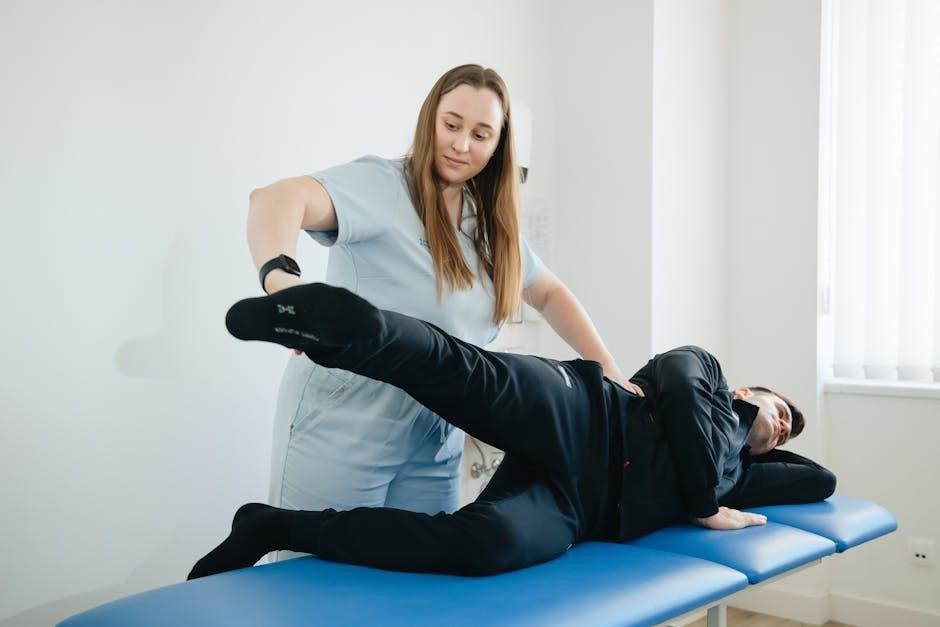
Locating a skilled physiotherapist is crucial for a personalized sciatica treatment plan, often incorporating exercises detailed in PDF guides. Seek practitioners specializing in musculoskeletal or neurological conditions, ensuring they possess advanced training in managing sciatic pain.
Verify credentials and licensing through relevant professional bodies. A thorough initial assessment is paramount; the physiotherapist should evaluate your specific condition, identify contributing factors, and develop a tailored exercise program.
Don’t hesitate to ask about their experience with sciatic nerve glides, core strengthening, and stretching techniques – all commonly found in physio exercises PDF resources. Effective communication and a collaborative approach are key to successful rehabilitation.
Consider seeking recommendations from your doctor or other healthcare professionals.
Downloadable Sciatica Exercise PDF Guides
Numerous online resources offer downloadable sciatica exercise PDF guides, providing convenient access to rehabilitation programs. These guides typically feature illustrated instructions for nerve glides, core strengthening, and stretching routines, designed to alleviate pain and improve function.
However, exercise caution when utilizing these resources. Always prioritize guides created by qualified physiotherapists or healthcare organizations to ensure accuracy and safety. Look for PDFs detailing proper form and modifications for varying fitness levels.
Many clinics, like Yorkville Sports Medicine, may offer their own PDFs as supplementary material. Remember, these guides are best used in conjunction with professional guidance, tailoring the exercises to your specific needs.
Ensure the guide emphasizes gentle progression and listening to your body.

Importance of Consistent Exercise
Consistent exercise is paramount for long-term sciatica management, even after pain subsides. Regularly performing the exercises outlined in your physio exercise PDF helps maintain flexibility, strengthen supporting muscles, and prevent recurrence.
Think of it as proactive maintenance for your spine and nervous system. Sporadic exercise provides temporary relief, but sustained effort yields lasting results. Adhering to a schedule, even with modified routines during flare-ups, is crucial.
The PDF guides often emphasize this point, highlighting that consistent engagement with the program is key to achieving and sustaining a pain-free lifestyle. It’s about building resilience, not just chasing symptom relief.
Make exercise a non-negotiable part of your routine.